Chairman of the Joint Chiefs Gen. Dan Caine said (PDF) the U.S. needs to be prepared for future conflicts in which adversaries will be able to closely track the location of forces and attack with autonomous systems that use artificial intelligence. “We have to assume from now on that our formations will be hunted by autonomous systems, jammed across the spectrum and tracked in real time”
SkySpotter supports Blue Force Tracking within those constraints!
During complex incident response over a wide area, command centers can lose visibility of blue force positions, degrading Common Operating Picture (COP) for tactical coordination.

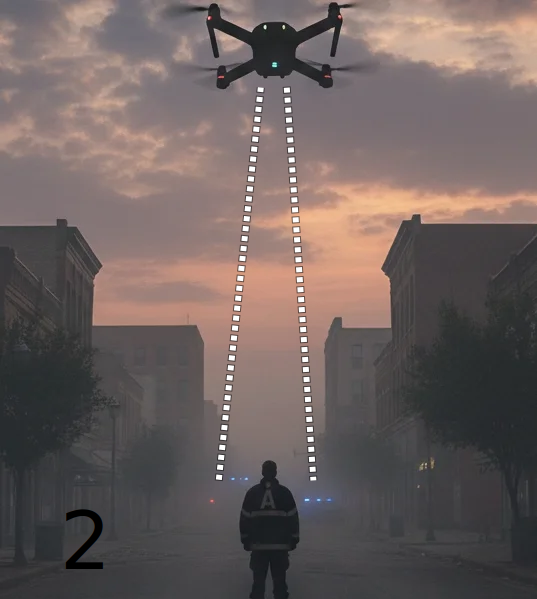
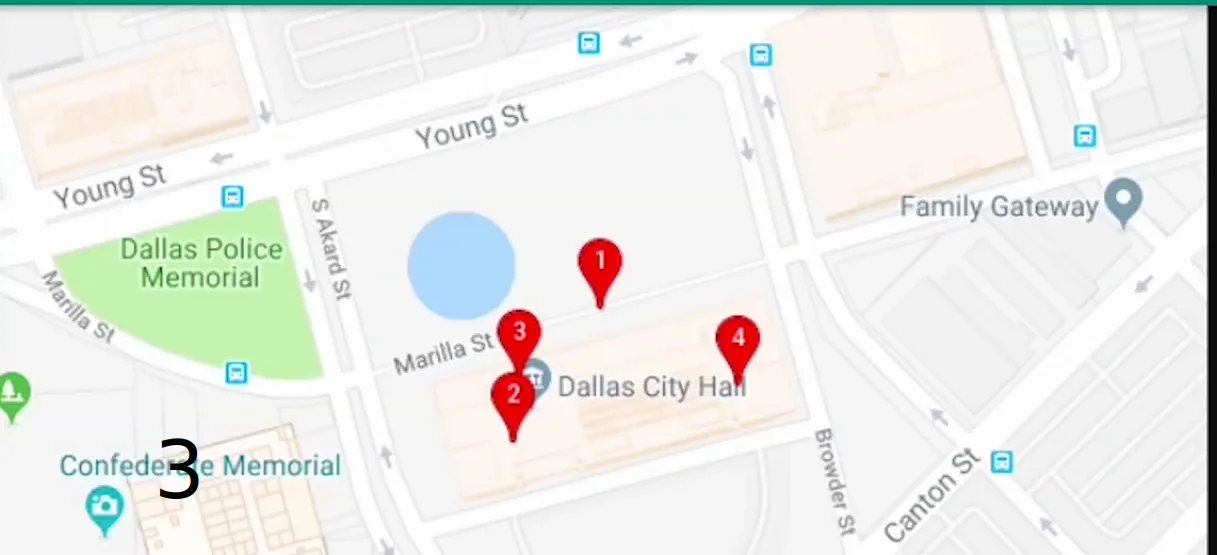
(Usage/ Concept of Operations / CONOPS):
- Wear Assigned Tag: Each team member wears an assigned, lightweight visible-spectrum passive identifier (illustrated with the “A” velcro patch).
- Drone Flies the Area of Operations: The pilot flies the area of operations, edge video processing, such as a phone, enables real-time detection and processing during the response.
- Mapping/C4 Intelligence, Surveillance, and Reconnaissance: The system georeferences latitude/longitude from drone image data during the response for COP integration. Detected team member locations are displayed on an edge device map and/or transmitted to a Tactical Awareness Kit (*TAK) system or feed other ISR systems.
Benefits:
- Low RF Signature: Passive optical tracking means supports Emissions Control, with no on-body RF emissions (no “squawks”). This ensures Low Probability of Intercept / Low Probability of Detection (LPI/LPD), preventing adversarial triangulation, SIGINT tracking, or electronic warfare interference in RF constrained environments.
- Size, Weight, Power and Cost optimized: SWaP-C – minimal additional batteries and charging cycles.
- Rapid Interoperability for Ad-Hoc Teams: Generate and deploy optical identifiers on-the-fly. Suitable for multi-jurisdictional response, allowing immediate integration of disjointed agencies into a unified Blue Force Tracking network.